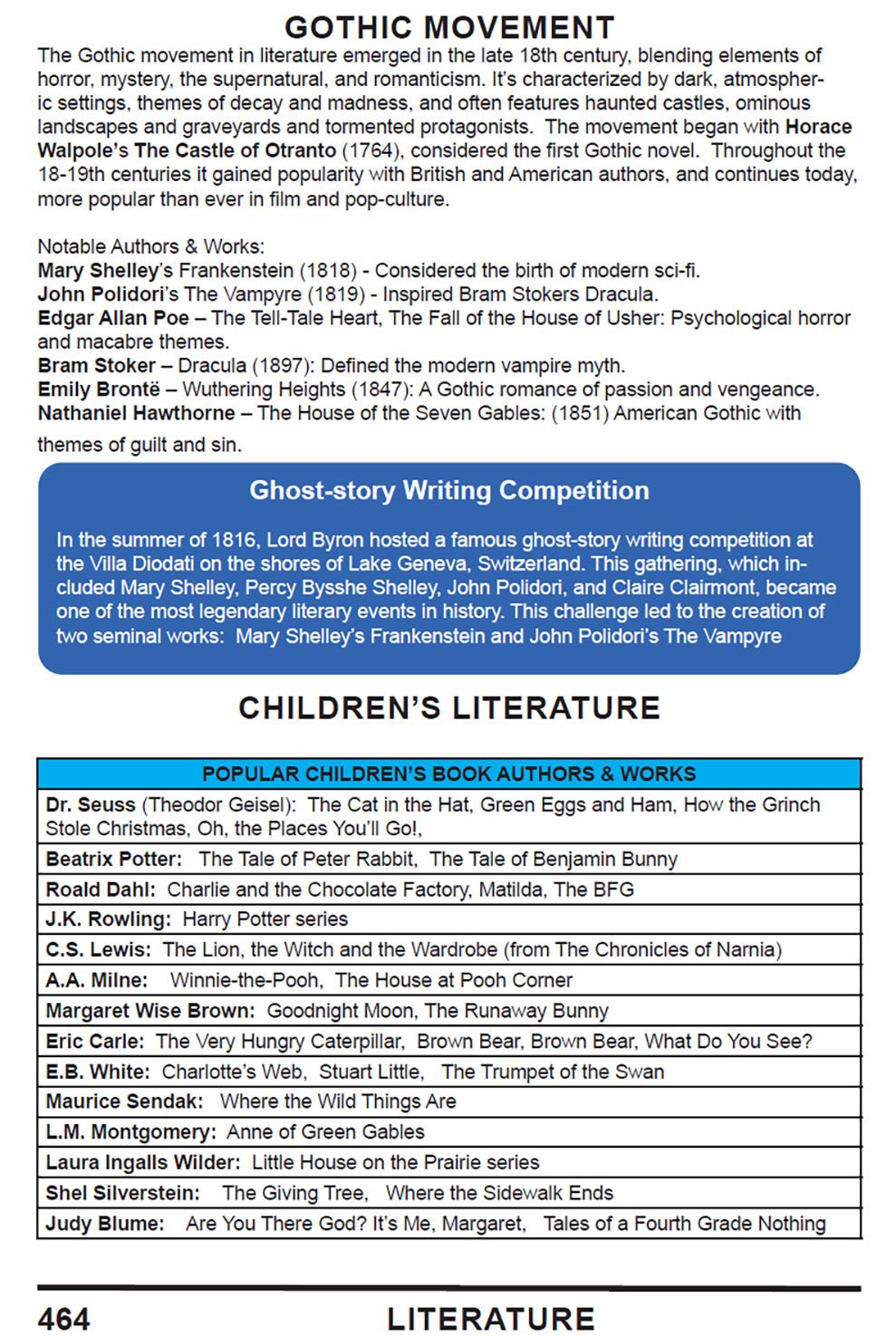
The Gothic movement in literature emerged in the late 18th century, blending elements of horror, mystery, the supernatural, and romanticism. It’s characterized by dark, atmospheric settings, themes of decay and madness, and often features haunted castles, ominous landscapes and graveyards and tormented protagonists. The movement began with Horace Walpole’s The Castle of Otranto (1764), considered the first Gothic novel. Throughout the 18-19th centuries it gained popularity with British and American authors, and continues today, more popular than ever in film and pop-culture.
Notable Authors & Works:
◉ Mary Shelley’s Frankenstein (1818) - Considered the birth of modern sci-fi.
◉ John Polidori’s The Vampyre (1819) - Inspired Bram Stokers Dracula.
◉ Edgar Allan Poe – The Tell-Tale Heart, The Fall of the House of Usher: Psychological horror and macabre themes.
◉ Bram Stoker – Dracula (1897): Defined the modern vampire myth.
◉ Emily Brontë – Wuthering Heights (1847): A Gothic romance of passion and vengeance.
◉ Nathaniel Hawthorne – The House of the Seven Gables: (1851) American Gothic with themes of guilt and sin.
Ghost-story Writing Competition
In the summer of 1816, Lord Byron hosted a famous ghost-story writing competition at the Villa Diodati on the shores of Lake Geneva, Switzerland. This gathering, which included Mary Shelley, Percy Bysshe Shelley, John Polidori, and Claire Clairmont, became one of the most legendary literary events in history. This challenge led to the creation of two seminal works: Mary Shelley’s Frankenstein and John Polidori’s The Vampyre.