PLANET FORMATION
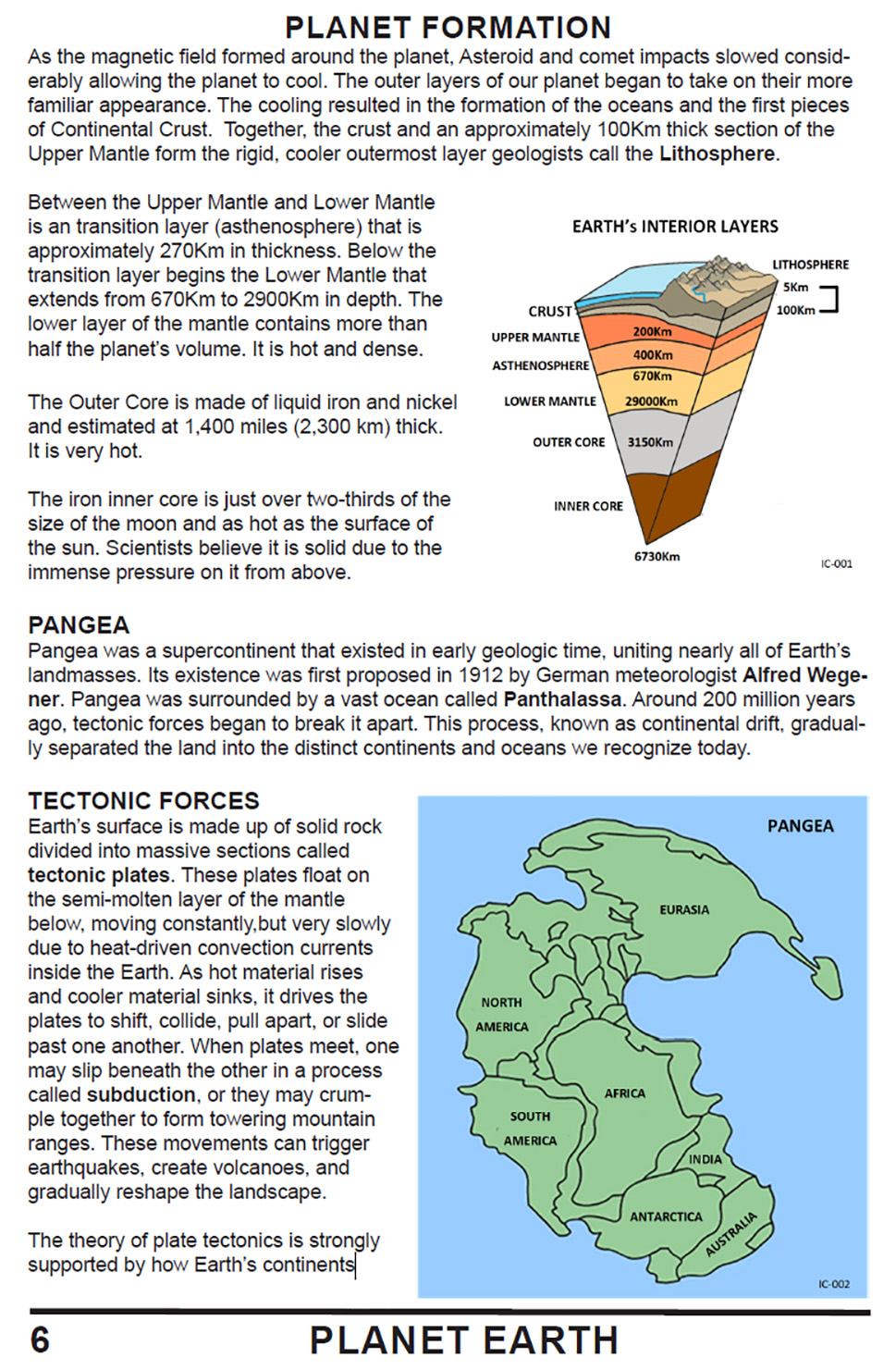
As the magnetic field formed around the planet, Asteroid and comet impacts slowed considerably allowing the planet to cool. The outer layers of our planet began to take on their more familiar appearance. The cooling resulted in the formation of the oceans and the first pieces of Continental Crust. Together, the crust and an approximately 100Km thick section of the Upper Mantle form the rigid, cooler outermost layer geologists call the Lithosphere.
Between the Upper Mantle and Lower Mantle is an transition layer (asthenosphere) that is approximately 270Km in thickness. Below the transition layer begins the Lower Mantle that extends from 670Km to 2900Km in depth. The lower layer of the mantle contains more than half the planet’s volume. It is hot and dense.
The Outer Core is made of liquid iron and nickel and estimated at 1,400 miles (2,300 km) thick. It is very hot.
The iron inner core is just over two-thirds of the size of the moon and as hot as the surface of the sun. Scientists believe it is solid due to the immense pressure on it from above.
PANGEA
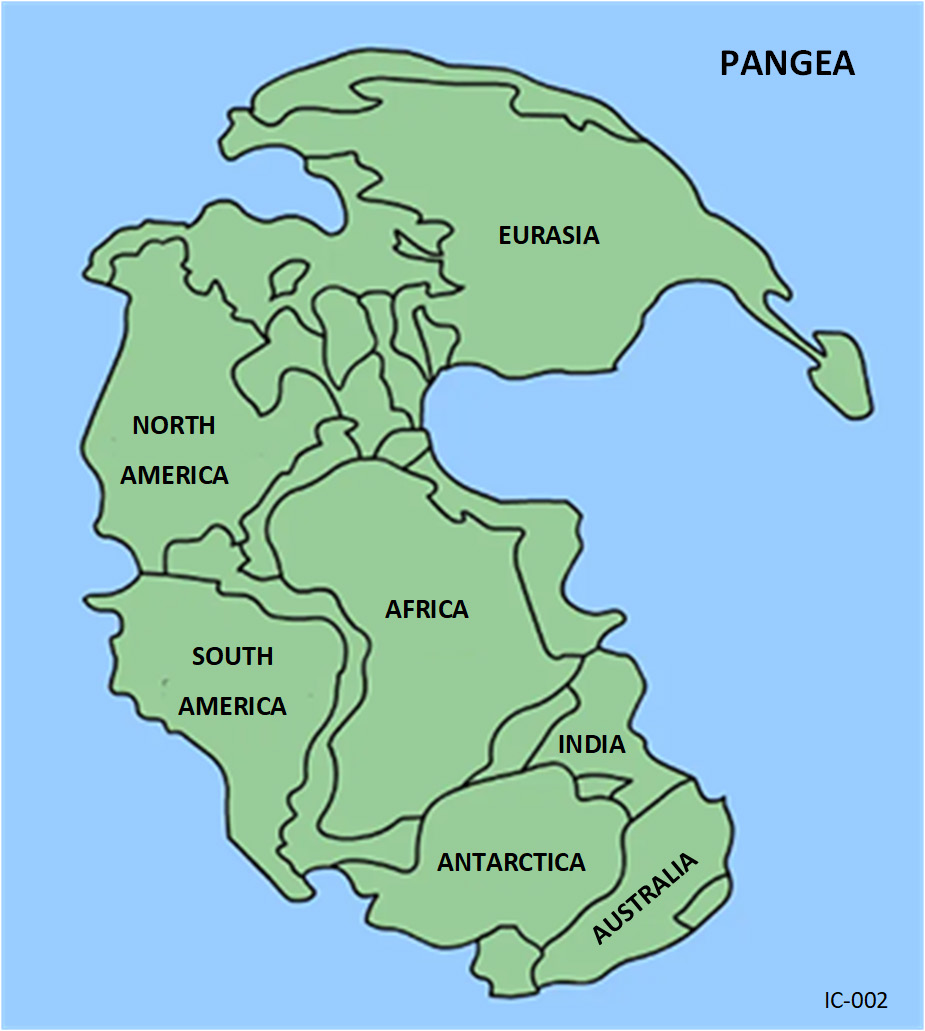
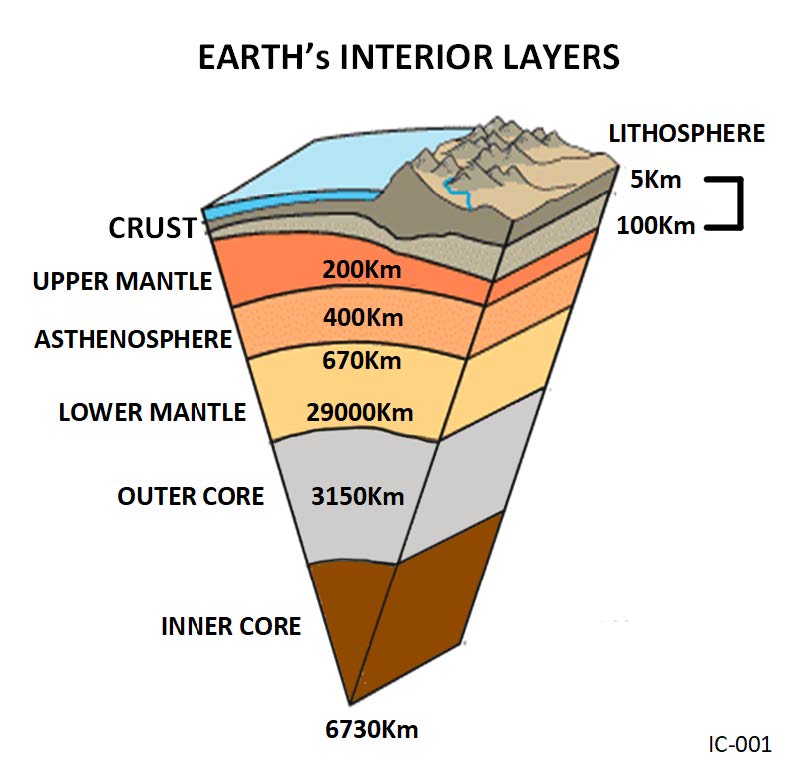
Pangea was a supercontinent that existed in early geologic time, uniting nearly all of Earth’s landmasses. Its existence was first proposed in 1912 by German meteorologist Alfred Wegener. Pangea was surrounded by a vast ocean called Panthalassa. Around 200 million years ago, tectonic forces began to break it apart. This process, known as continental drift, gradually separated the land into the distinct continents and oceans we recognize today.
TECTONIC FORCES
Earth’s surface is made up of solid rock divided into massive sections called tectonic plates. These plates float on the semi-molten layer of the mantle below, moving constantly,but very slowly due to heat-driven convection currents inside the Earth. As hot material rises and cooler material sinks, it drives the plates to shift, collide, pull apart, or slide past one another. When plates meet, one may slip beneath the other in a process called subduction, or they may crumple together to form towering mountain ranges. These movements can trigger earthquakes, create volcanoes, and gradually reshape the landscape.
The theory of plate tectonics is strongly supported by how Earth’s continents