ANCIENT WAR'S
TROJAN WAR (1300–1200 BC)
The conflict began when Trojan prince Paris abducted the wife of the king of Sparta Menelaus. Helen was said to be the most beautiful woman in the world. Enraged, Menelaus called upon his brother Agamemnon, king of Mycenae, to lead a coalition of Greek forces against the city of Troy. The conflict lasted 10 years.
The Greeks eventually devised a cunning plan to end the stalemate. They constructed a giant wooden horse, known as the Trojan Horse, and hid soldiers inside. Pretending to abandon the siege, they left the horse as a gift to the Trojans. Believing it to be a symbol of their victory, the Trojans brought the horse into their city. That night, the hidden warriors emerged and opened the city gates for their comrades. The Greeks destroyed the city and killed or enslaved its citizens. Priam was killed, Hector’s wife Andromache was taken as a slave, and Helen returned to Sparta with Menelaus.
FALL OF BABYLON (539–538 BC)
The Siege of Babylon marks the fall of the Neo-Babylonian Empire to the Achaemenid Persian Empire under Cyrus the Great. One of the most powerful cities of its time, Babylon was the capital of a vast empire known for its wealth, grandeur, and architecture like the Hanging Gardens.
The Persian army utilized clever strategies to capture Babylon with minimal resistance. According to historical accounts, Cyrus diverted the waters of the Euphrates river, which ran through Babylon, lowering the water level enough to allow his troops to enter the city through the riverbed, bypassing the impregnable perimeter walls.
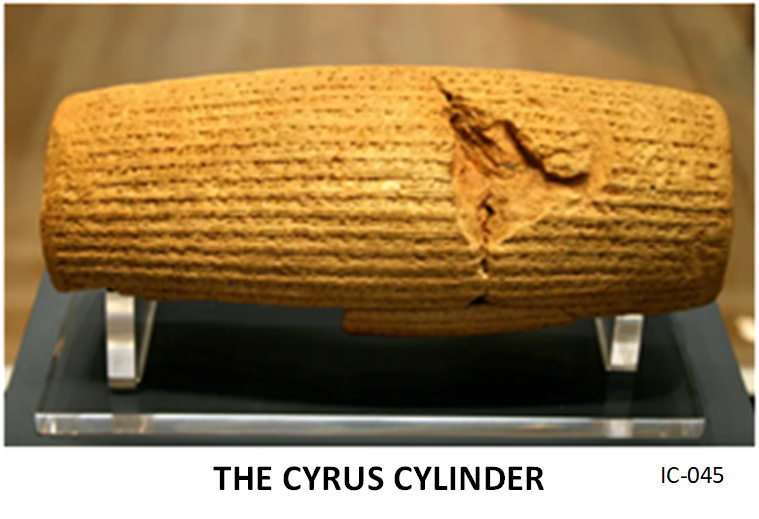
Nabonidus was an unliked ruler, and once inside Persian forces faced little resistance. Capture of Babylon was marked by declaration as Cyrus the liberator rather than a conqueror. He issued the Cyrus Cylinder, an artifact often regarded as an early charter of human rights, proclaiming religious tolerance and promising to restore local deities and temples.
The fall of Babylon is considered a turning point in ancient history, reflecting the rise of the Persian Empire as a major global power and liberating the Jewish people from Babylonian captivity.
GRECO-PERSIAN WARS (492–449 BC)
The Greco-Persian Wars were a series of conflicts between the Persian Empire and the Greek city-states, primarily Athens and Sparta. The wars began when the Greeks in Ionia, under Persian rule, revolted against Persian control, leading to two major Persian invasions of Greece.
In the First Persian War, Persian King Darius I launched an expedition to punish Athens for supporting the Ionian revolt. The Greeks won a decisive victory at the Battle of Marathon (490 BC).
Xerxes I, Darius’ successor, led the Second Persian War. Persia invaded Greece with a massive army and navy. Key battles included the Battle of Thermopylae, where King Leonidas of Sparta and 300 Spartans famously resisted but were defeated, and the naval Battle of Salamis (480 BC), where the Greek fleet, led by Themistocles, destroyed much of the Persian navy.
The Battle of Plataea (479 BC) marks the end of the Persian land campaign. The wars demonstrated the resilience of the Greek city-states and preserved their independence, influencing the rise of classical Greek culture and democracy.