WEAPONS
SWORDS IN THE MIDDLE AGES
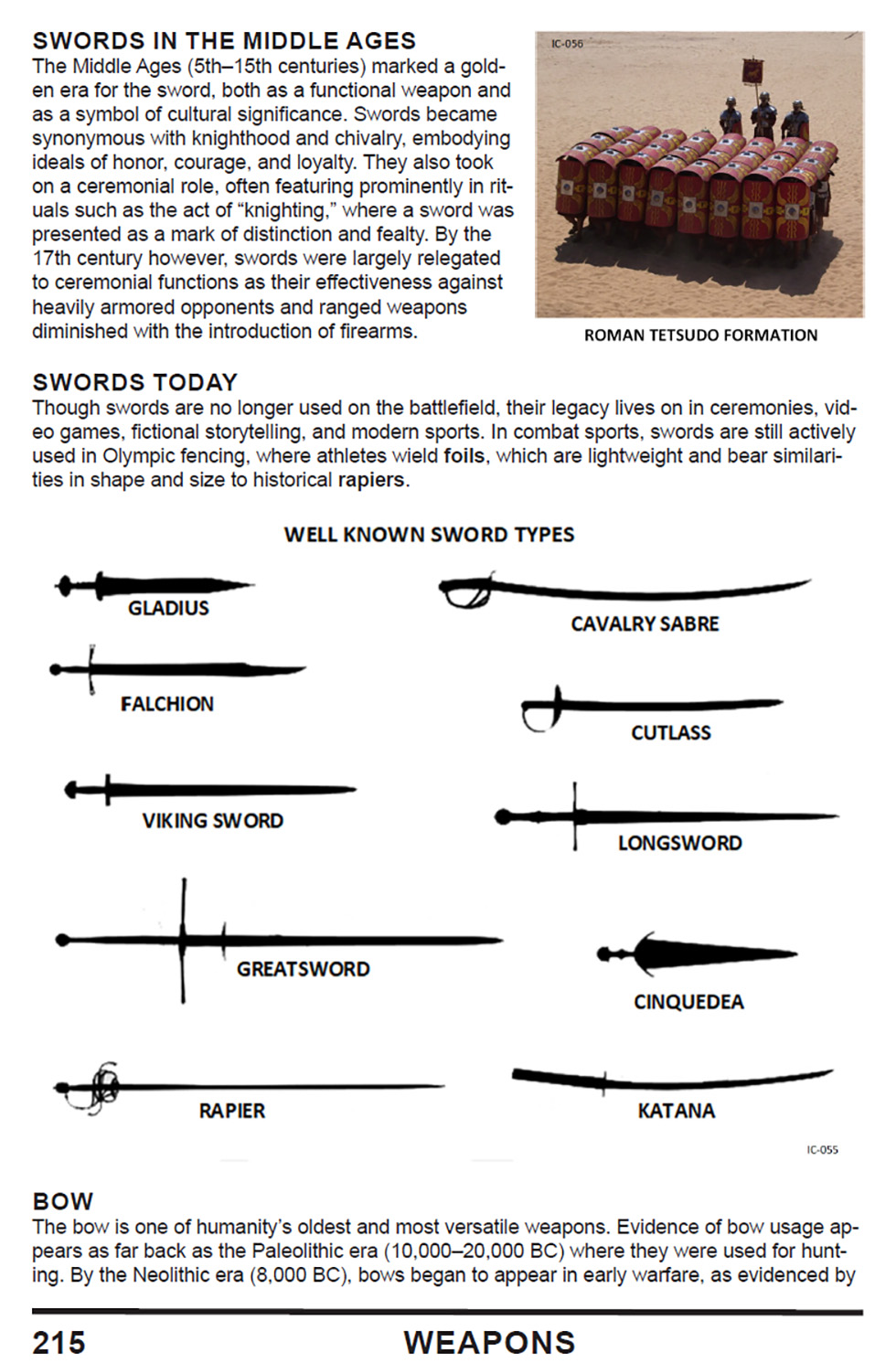
The Middle Ages (5th–15th centuries) marked a golden era for the sword, both as a functional weapon and as a symbol of cultural significance. Swords became synonymous with knighthood and chivalry, embodying ideals of honor, courage, and loyalty. They also took on a ceremonial role, often featuring prominently in rituals such as the act of “knighting,” where a sword was presented as a mark of distinction and fealty.
By the 17th century however, swords were largely relegated to ceremonial functions as their effectiveness against heavily armored opponents and ranged weapons diminished with the introduction of firearms.
SWORDS TODAY
Though swords are no longer used on the battlefield, their legacy lives on in ceremonies, video games, fictional storytelling, and modern sports. In combat sports, swords are still actively used in Olympic fencing, where athletes wield foils, which are lightweight and bear similarities in shape and size to historical rapiers.

BOW
The bow is one of humanity’s oldest and most versatile weapons. Evidence of bow usage appears as far back as the Paleolithic era (10,000–20,000 BC) where they were used for hunting.By the Neolithic era (8,000 BC), bows began to appear in early warfare, as evidenced by archaeological finds in Mesopotamia and ancient Egypt.